

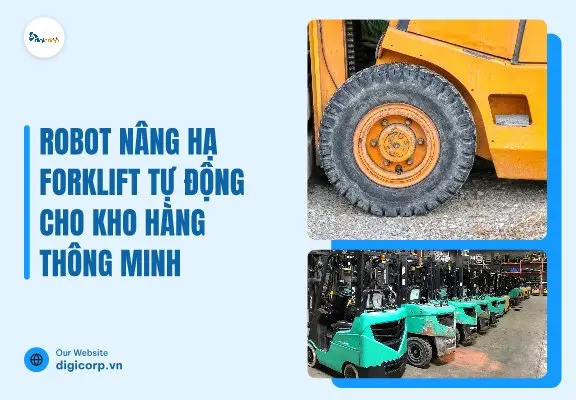
This article explains how the automatic forklift lifting robot works, the benefits it brings to warehouses, and when businesses should invest. It includes implementation procedures and safety considerations during operation.
The automatic forklift lifting robot is a driverless lift vehicle that moves autonomously, lifts and lowers pallets along pre-programmed routes, enabling continuous warehouse operation and reducing reliance on manual labor. For businesses building smart warehouses, it directly connects warehouse management data with real-world picking and loading activities. This article explains how the robot works, its benefits, applications, investment criteria, and implementation process.
What is the Automatic Forklift Lifting Robot and How Does It Operate
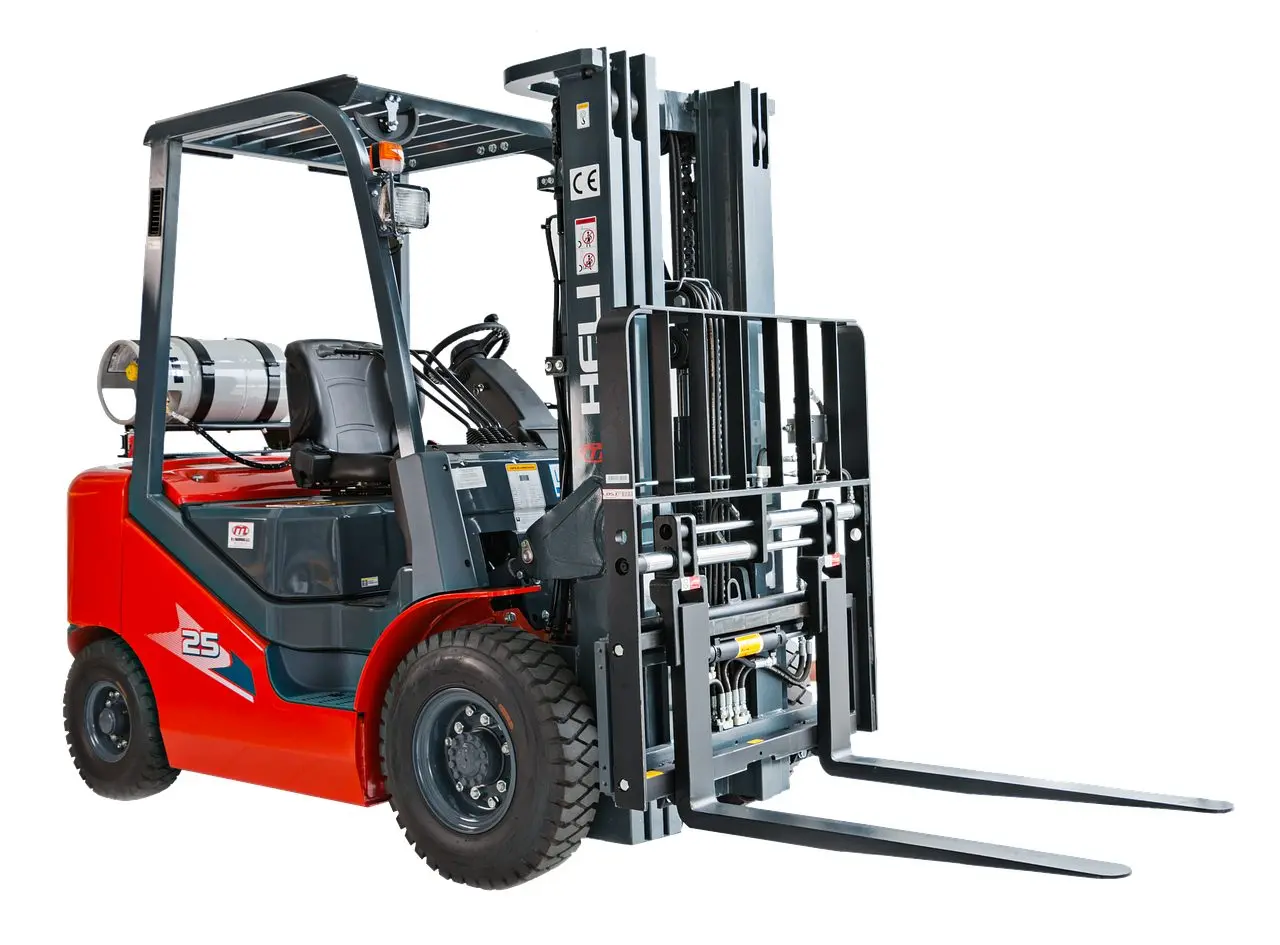
Essentially, this is a lift equipped with sensors, a controller, and navigation software to autonomously perform tasks without a driver. The robot receives commands from the management system, autonomously navigates to the pick location, lifts the pallet, and delivers it to the destination. The entire process is monitored via central software.
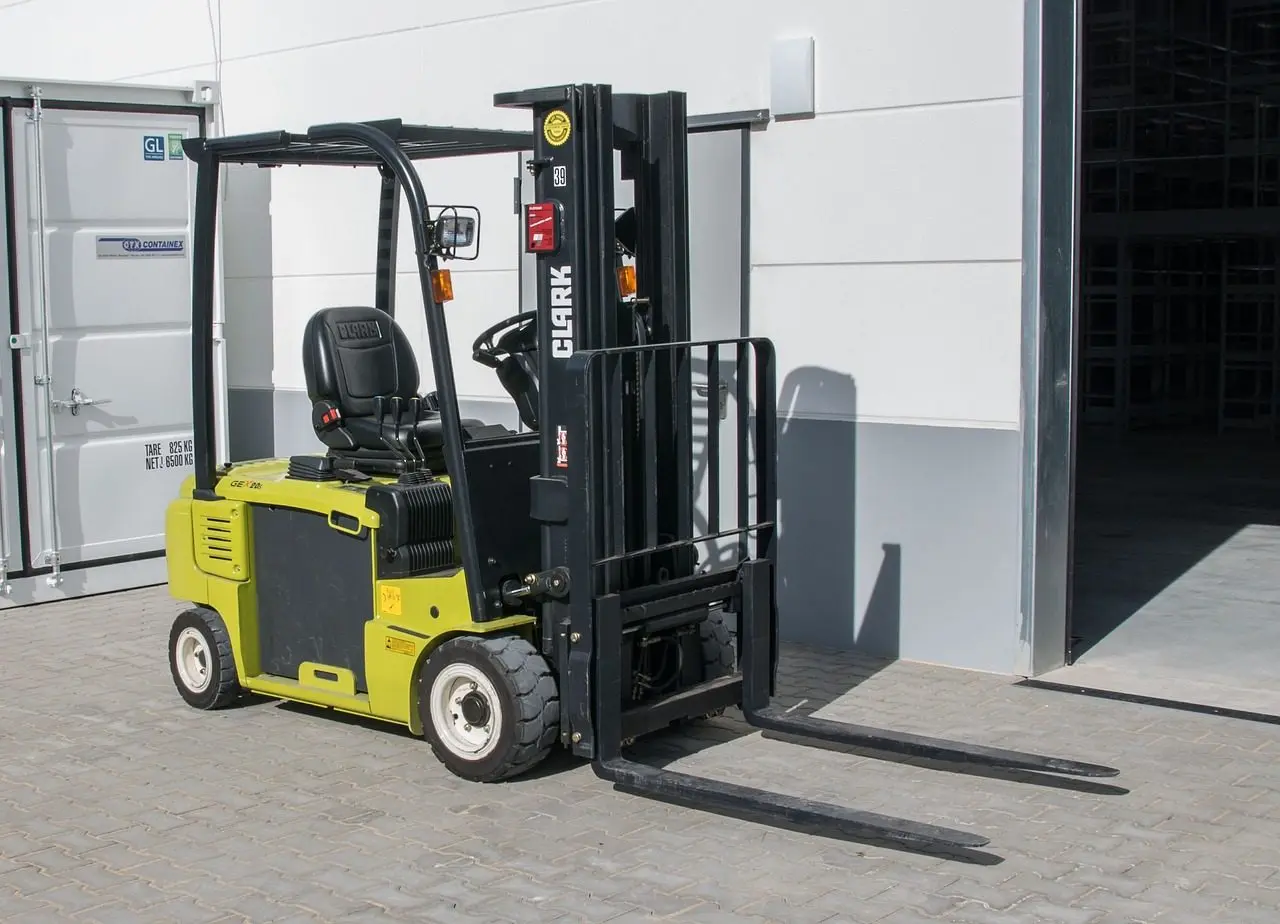
Key Components
- Chassis and lifting mechanism: lift columns, hoist column, and hydraulic or electric system to lift and lower pallets at various heights.
- Sensor system: laser sensors, cameras, and distance sensors to detect obstacles, pallets, and shelf locations.
- Controller and software: processes data, plans routes, and communicates with the warehouse management system.
- Power source: rechargeable batteries, many models can autonomously return to a charging station when low on power.
Positioning and Navigation Technology
Common navigation methods include magnetic tape guidance, floor-adhesive QR codes, laser reflection, and natural SLAM-based positioning using environmental maps. Each method has its own advantages. Magnetic tape guidance is easy to install but less flexible when layouts change, while SLAM allows route adjustments without floor remodeling.
Benefits of Introducing a Forklift Lifting Robot into a Smart Warehouse
The most evident benefit is stable, repeatable operation that can work multiple shifts continuously. When combined with warehouse management software, the robot enables real-time inventory control instead of relying on manual record-keeping.
- Reduced labor dependency: repetitive picking and loading tasks are automated, allowing staff to focus on supervision and exception handling.
- Enhanced safety: collision-avoidance sensors reduce the risk of accidents commonly associated with human-driven forklifts.
- Operational accuracy: the robot places pallets precisely as intended, reducing misplacement and product damage.
- Transparent data: every movement is recorded, supporting traceability and operational optimization.
- Space optimization: certain robot models perform well in narrow aisles and high shelves, increasing storage density.
Common Applications in Warehouses and Factories
Forklift lifting robots are suitable for processes with repetitive pallet movement and relatively stable routes. Below are common deployment scenarios.

- Inbound receiving to storage shelving: robot picks up pallets at the receiving dock and delivers them to system-assigned locations.
- Supplying raw materials to production lines: transports materials from the warehouse to the line start based on schedule or request signals.
- Collecting finished products from the line: moves finished product pallets to packing or outbound staging areas.
- Inter-area transfer: moves goods between cold storage, isolation zones, and quality inspection areas.
- Outbound order preparation: aggregates pallets in a staging area before loading onto trucks.
Industries that commonly require these solutions include electronics, food and beverage, pharmaceuticals, packaging, logistics, and e-commerce.
When to Invest and When Not to
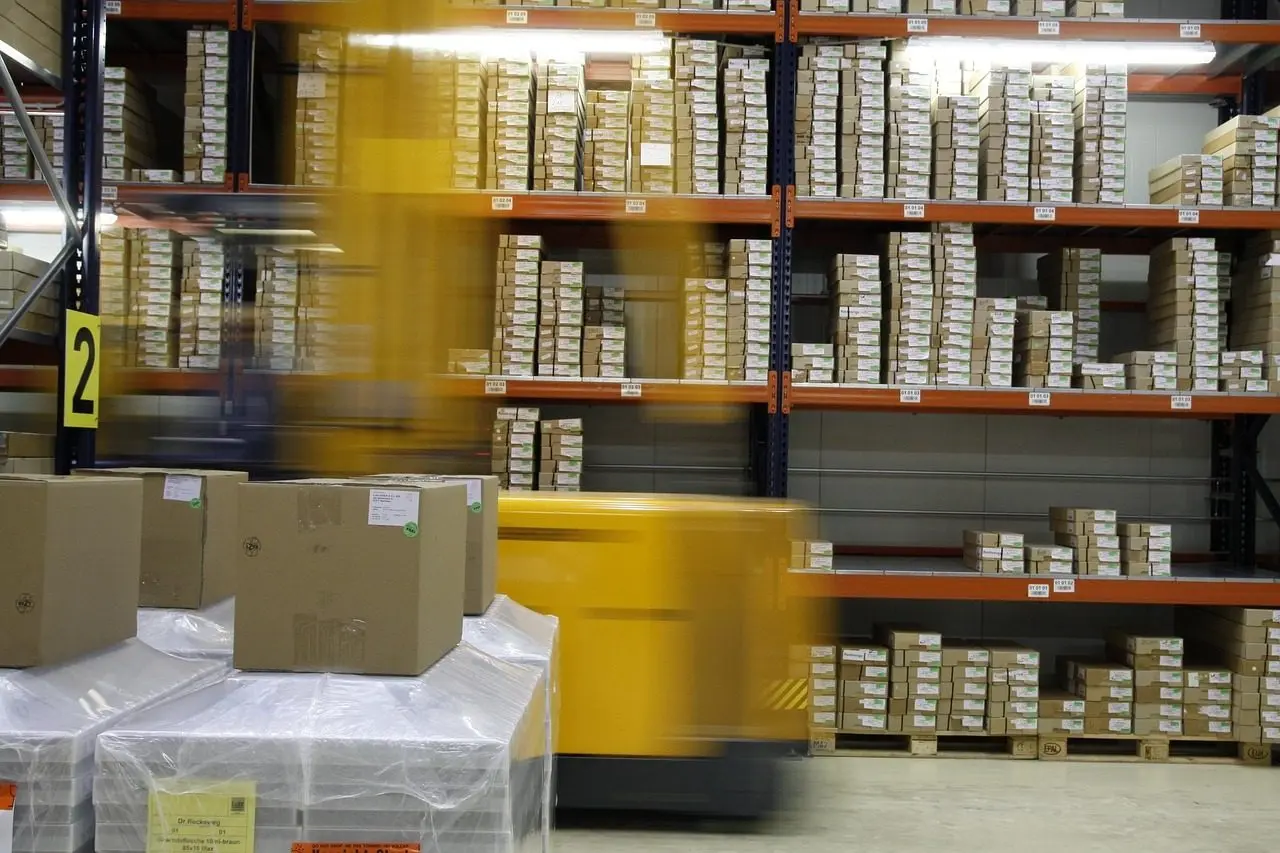
Companies should consider investing when pallet movement volume is high, repetitive daily, and when hiring or retaining forklift operators is challenging. Multi-shift operations with high traceability or safety requirements also warrant consideration.
Signs It’s Time to Deploy
- Consistent flow patterns with relatively fixed movement routes.
- Pallets and goods standardized in size and load capacity.
- The company has or is implementing warehouse or production management software.
- Costs from errors, product damage, or workplace accidents are concerning.
Situations Not Yet Ready for Deployment
- Warehouse floors are uneven, steep, or frequently damp without a remodeling plan.
- Pallets are inconsistent, goods are stacked haphazardly, and there are no storage standards.
- Volume of goods is too low or highly variable, making ROI hard to achieve.
- Warehouse layout is set to change significantly soon.
For these cases, companies can start by standardizing processes and data first, then progressively automate in stages.
Implementation Process for the Automatic Forklift Lifting Robot
An effective project requires a journey from on-site assessment to trial operation, rather than purchasing equipment and then adjusting the warehouse. The basic steps are:

- Current state assessment: measure floor area, shelf height, aisle width, floor quality, pallet type, and goods flow.
- Define the problem: clarify which process needs automation, desired objectives, and operational constraints.
- Solution design: choose robot models, navigation methods, number of units, charging station locations, and software integration plans.
- Installation and configuration: map the warehouse, set routes, pick and drop points, and connect to the management system.
- Trial run and fine-tuning: test with real loads, check exception scenarios, and fine-tune speed and safe distances.
- Training and handover: instruct supervisory staff, basic fault handling, and routine maintenance.
Many companies opt to pilot in a single area first, evaluate results, then scale up. This approach reduces risk and allows staff to acclimate.
Operational Considerations and Safety Assurance
The robot performs best when the warehouse environment remains stable and operations are clearly defined. Companies must delineate robot operating zones, especially where paths intersect with pedestrians and manual forklifts.

- Keep aisles clear, avoid goods encroaching on robot paths.
- Clean sensors, inspect lift cylinders and batteries per the supplier’s maintenance schedule.
- Establish procedures for handling robot stoppage due to obstacles or system errors.
- Update maps and routes whenever shelving or area layouts change.
- Train staff on warning signals and safe coordination with robots.
If companies are looking to automate pallet lifting and lowering, DIGICORP can partner from consulting and implementation to operation, optimizing performance and sustainable growth. DIGICORP serves clients in Ho Chi Minh City, Hanoi, and Bac Ninh. Contact Hotline 0912345678, email contact@digicorp.vn, or visit 36 Tran Duy Hung Alley, Yen Hoa Ward, Hanoi for a survey and tailored solution consultation.