


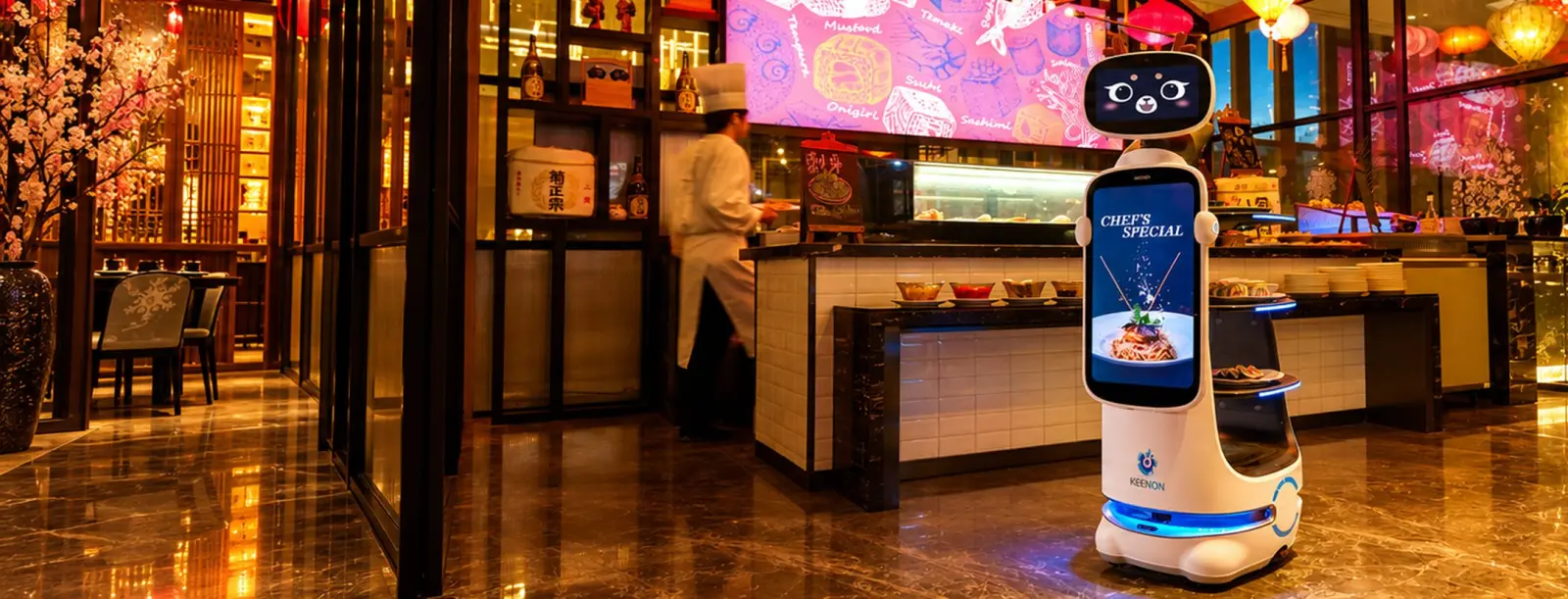
Smart Restaurant
The smart restaurant model helps optimize operating costs and enhance customer experience with the support of automated robots. The article provides a comprehensive perspective on F&B technology trends and effective application solutions.
Get a free demo now!Relieve operational pressure, elevate the experience
Challenges for Businesses
- Pressure to serve during peak hours
- Staff must move and continuously deliver dishes
- Labor costs are rising
- Difficulty maintaining a steady service speed
- Staff have little time to care for customers
Solution from DIGICORP ROBOTICS
- Automate food transportation using robots
- Flexible service during peak hours
- Help staff focus on direct customer support
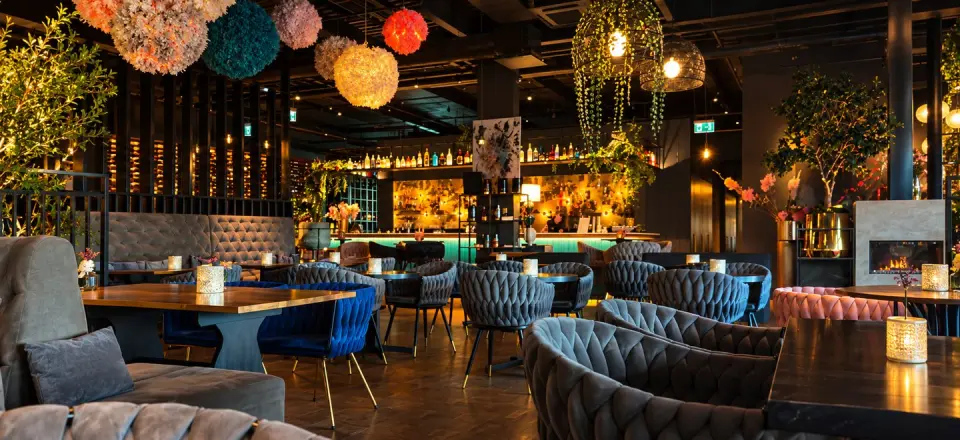
- Create a modern, professional restaurant image
- Attract customers with new technology experiences
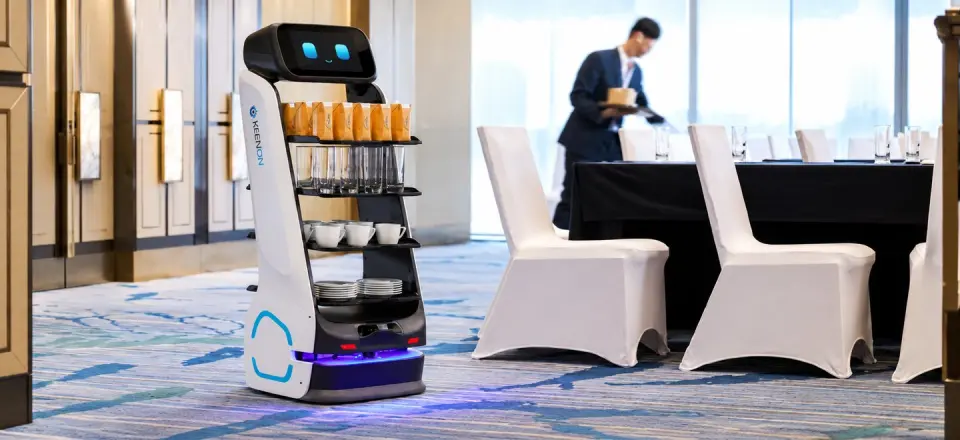
Smart restaurants help optimize operating costs and enhance customer experience with the support of automated robots. This article offers a comprehensive perspective on F&B technology trends and effective application solutions for investors seeking new directions.
What is a smart restaurant and the F&B transformation trend
A smart restaurant is a food and beverage business model that applies automation technology and artificial intelligence to the entire operational process, from ordering and food preparation to serving and payment. This model helps minimize reliance on manual labor while creating a smoother and more accurate operational flow.
Core characteristics of technology-applied models
The biggest difference in this model lies in the ability to connect real-time data between various departments in the establishment. All customer information is processed through a central system rather than traditional verbal communication or paperwork. This helps eliminate delays during service and minimizes unnecessary errors.
The development of service robots in the F&B industry
The appearance of restaurant service robots has completely changed the landscape of many modern eateries and cafes. These devices not only perform basic food delivery tasks but also navigate flexibly in tight spaces thanks to smart sensors. The presence of robots helps free staff from heavy, repetitive daily tasks.
Outstanding benefits of transitioning to a smart model
Applying automation technology brings practical and sustainable economic value to restaurants rather than merely following superficial trends. Investors can clearly see changes in their cost structure and service quality after a short period of operation.
Cutting labor and long-term operating costs
Labor costs have always been a difficult problem for restaurant owners amid fluctuating labor markets. The automation model helps minimize serving and food delivery staff costs, allowing restaurants to maintain stable operations even during labor shortages. In the long run, the initial investment in technological equipment will be offset by monthly payroll savings.
Enhancing service speed and accuracy
Waiting times for food are noticeably reduced when the ordering system and kitchen are directly interconnected. Robots move along pre-programmed routes at a steady speed, avoiding table mix-ups or food spills. Precision in every stage helps restaurants maintain service quality even during peak hours.
Increasing novel experiences for customers
The presence of modern technologies creates a highlight that attracts diners to visit and experience the culinary space. Customers find it exciting when robots bring food to their tables or when they scan codes to order food directly on their phones. These experiences contribute to higher customer retention and encourage them to actively share photos on social media.
Indispensable technologies in a smart restaurant
To operate an automated culinary space, a restaurant requires the synchronization of various hardware and software systems. Each component undertakes a distinct task while working toward the common goal of optimizing overall performance.
Service robots and automated food delivery
Modern robot lines use SLAM positioning technology combined with LiDAR sensors to navigate safely between tables without complex guide rails. They have the ability to detect obstacles, automatically avoid pedestrians, and play notification sounds upon arriving at a table. These devices take care of delivering food and clearing dirty dishes back to the kitchen area.
Electronic menu systems and cashless payment
Customers can place orders themselves via QR codes placed at their tables or wall-mounted built-in tablets. This gives diners proactivity, allowing them more time to choose dishes without pressure. Additionally, electronic payment gateways complete transactions in seconds without needing cash or giving change.
POS management software and KDS kitchen display systems
The Kitchen Display System (KDS) completely replaces traditional paper orders with a visual electronic screen. Chefs can clearly see which dishes need to be prepared first and which come next in chronological order. The accompanying management software also automatically summarizes revenue and real-time inventory levels.
Smart restaurant robot solutions from DIGICORP
DIGICORP provides advanced automation equipment tailored to the specific business characteristics of various food and beverage models in the Vietnamese market. These solutions are designed to directly address bottlenecks in the actual operations of restaurants.
Optimized service robot series for every space
The product lines provided by DIGICORP feature compact designs, flexible trays, and large battery capacities, well-suited for continuous operation needs. The equipment operates stably in crowded spaces, from hotpot and grill restaurants and seafood eateries to large-scale cafes. Excellent load-bearing capacity allows robots to transport multiple food trays in a single trip.
Flexible integration capabilities with existing workflows
DIGICORP's solutions can easily connect with popular restaurant management software currently on the market without disrupting established workflows. The technical team assists with spatial map configuration and system synchronization so equipment can start working immediately after handover.
Steps to effectively implement the smart restaurant model
Digital transformation in culinary businesses requires thorough preparation in both strategy and resources to achieve optimal efficiency. Adhering to proper implementation steps will help investors avoid unnecessary risks and waste.
Assessing needs and investment budgets
Restaurant owners need to clearly define their floor space, average customer volume, and weak points in their current service process to select suitable equipment. Planning the budget from the start helps balance equipment investment costs with future return on investment.
Selecting compatible equipment and software
Synchronization between robots, POS management software, and ordering systems is a decisive factor in project success. Prioritize providers of turnkey solutions to ensure devices communicate smoothly during operation.
Training staff to master technology
Humans still play a central role even in automated models. Staff must be guided on how to operate, handle arising situations, and perform periodic equipment maintenance. The smooth coordination between humans and robots will create a flawless service process.
For detailed advice on robot solutions and automation technology for your culinary space, please contact DIGICORP ROBOTICS via phone at (+84) 901 725 399 or email contact@digicorp.vn. You can also visit the website https://digicorp.vn to explore the latest equipment lines.
Optimize operations with robots
-

50%
Optimized operating costs
-

200+
Dishes delivered per day
-

+2-3x
Service efficiency
-

90%
Customer satisfaction with experience
Standout features of the robot
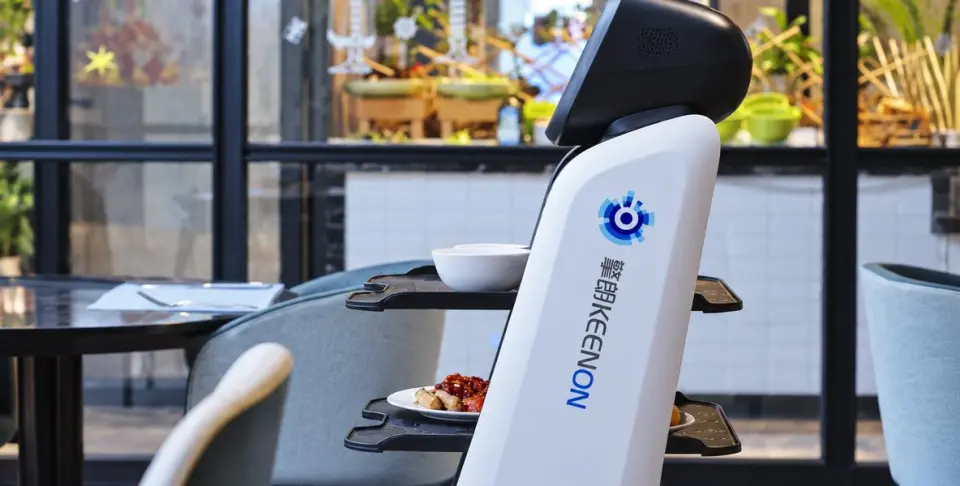
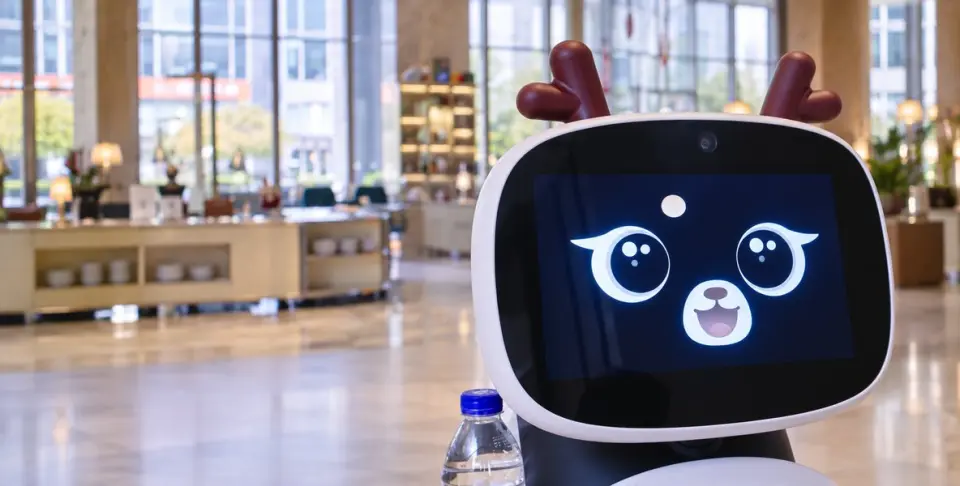
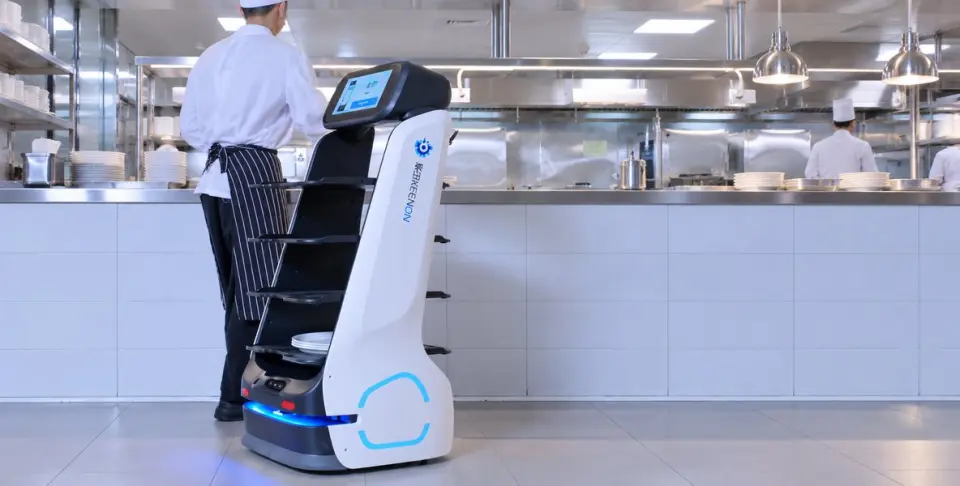
Combining 3D perception with instant response capability
Accurately identify the environment to proactively avoid obstacles quickly
Large touch screen, optimal height
Large touch screen combined with a suitable height design, enhancing daily operational efficiency
Automatic charging
High-capacity battery, continuous operation up to 18 hours with a single charge
Reference Robot models
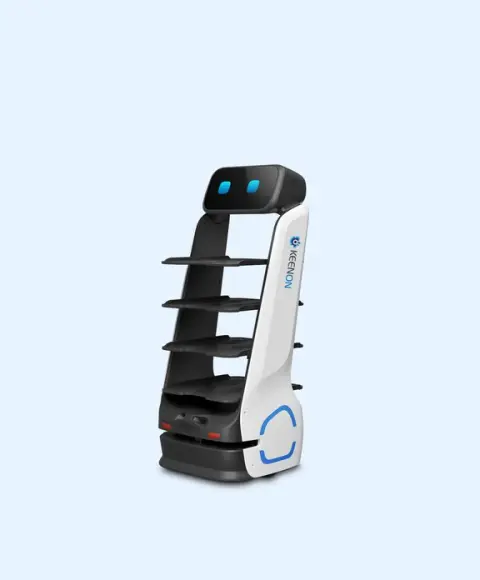
T9 Serving Robot
Giao hàng đa tầng, phục vụ thông minh
More solutions from Digicorp Robotics
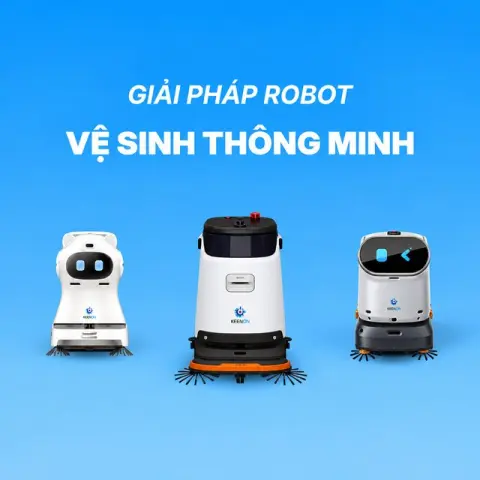
Smart cleaning
Automated cleaning robots provide continuous, even cleaning and cost-effective operation for all floor sizes.

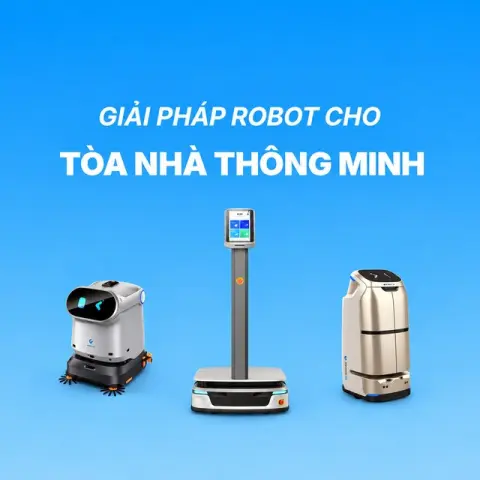
Smart building
Robots guide, deliver, and assist customers in office buildings, hotels, and shopping malls.
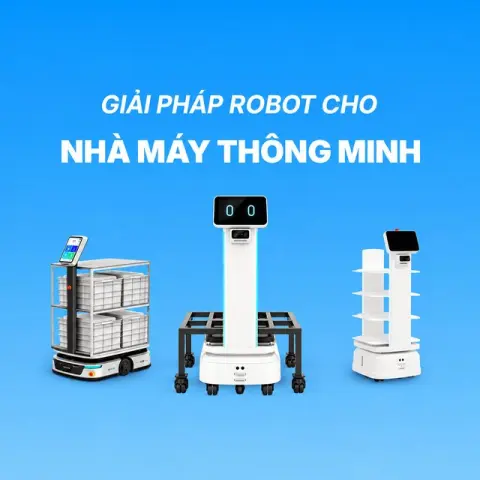
Smart Factory
Discover the concept of smart factories and how automation technology and industrial robots optimize production processes. Learn about solutions from DIGICORP ROBOTICS.