

The article provides a detailed analysis of the benefits when businesses deploy autonomous robots, from cost reduction and productivity increase to safety improvements. Read now to understand how to choose the right solution and optimize investment.
What Benefits Does Consulting for Autonomous Robot Deployment Bring?
The article provides a detailed analysis of the benefits when businesses deploy autonomous robots, from cost reduction and productivity increase to safety improvements. Read now to understand how to choose the right solution and optimize investment.
1. What Benefits Does Consulting for Autonomous Robot Deployment Bring?
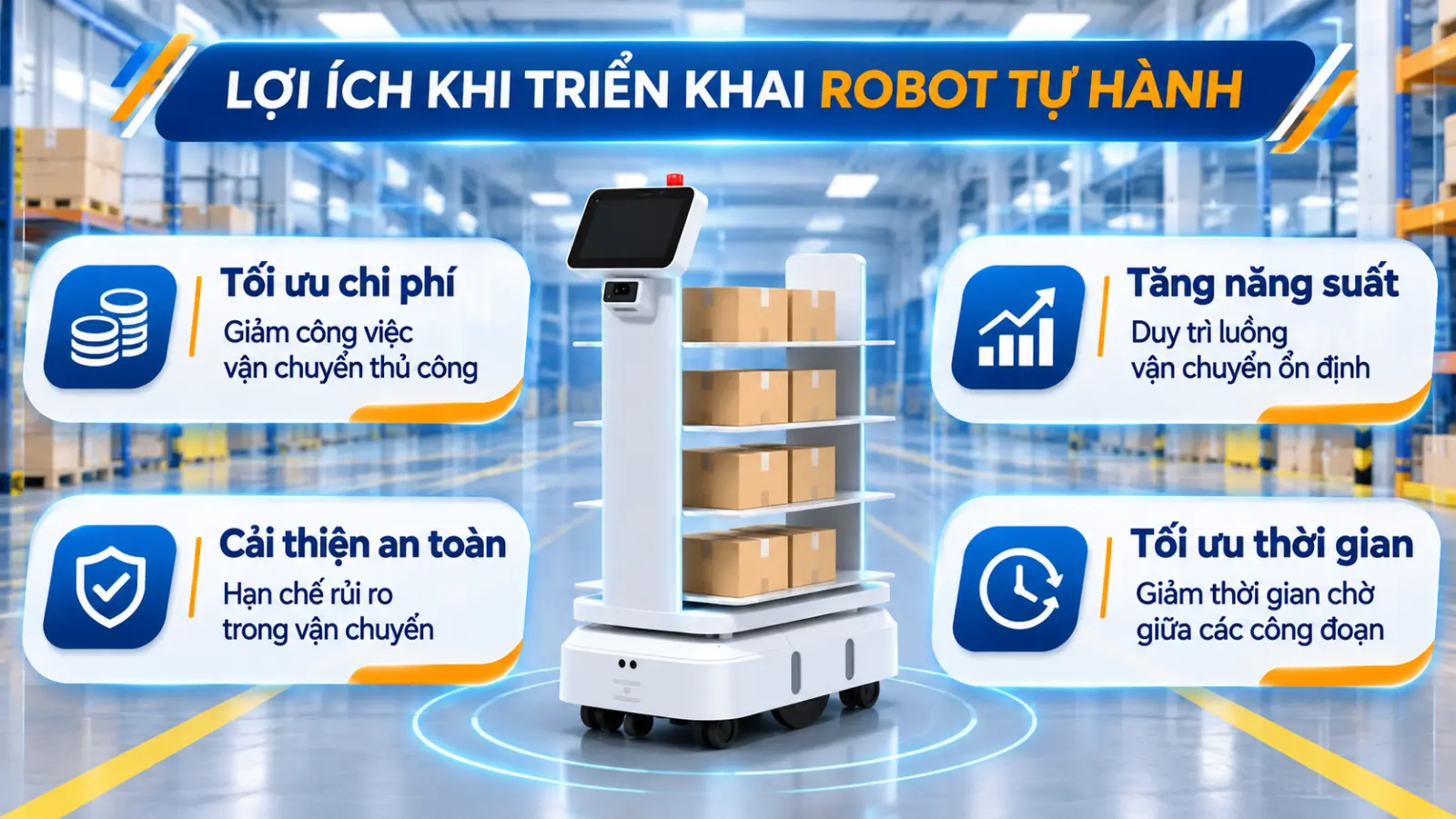
Autonomous robots are becoming a key factor in automating production and logistics processes. When properly consulted and deployed, they not only cut labor costs but also improve accuracy, reduce machine downtime, and create a safer working environment.
2. Objectives and Input Requirements
2.1. Identify Needs and Scale
Before deciding to deploy autonomous robots, a business must clarify its goals: increase productivity, reduce costs, or improve safety? At the same time, define the project scope – number of robots, operational area, and desired level of automation.
2.2. Evaluate Current Processes
A detailed analysis of existing processes helps identify repetitive steps, waiting times, and safety weak points. This data serves as the basis for designing suitable robots and avoiding resource waste.
2.3. Robot Selection Criteria
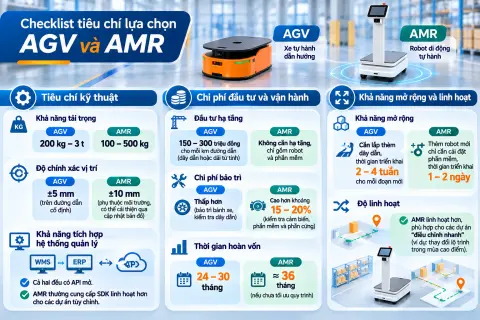
Typical criteria include load capacity, travel speed, positioning accuracy, compatibility with management systems (MES/WMS), and future scalability. Selecting based on these criteria maximizes ROI.
3. Evaluation Checklist
3.1. Space and Infrastructure Inspection
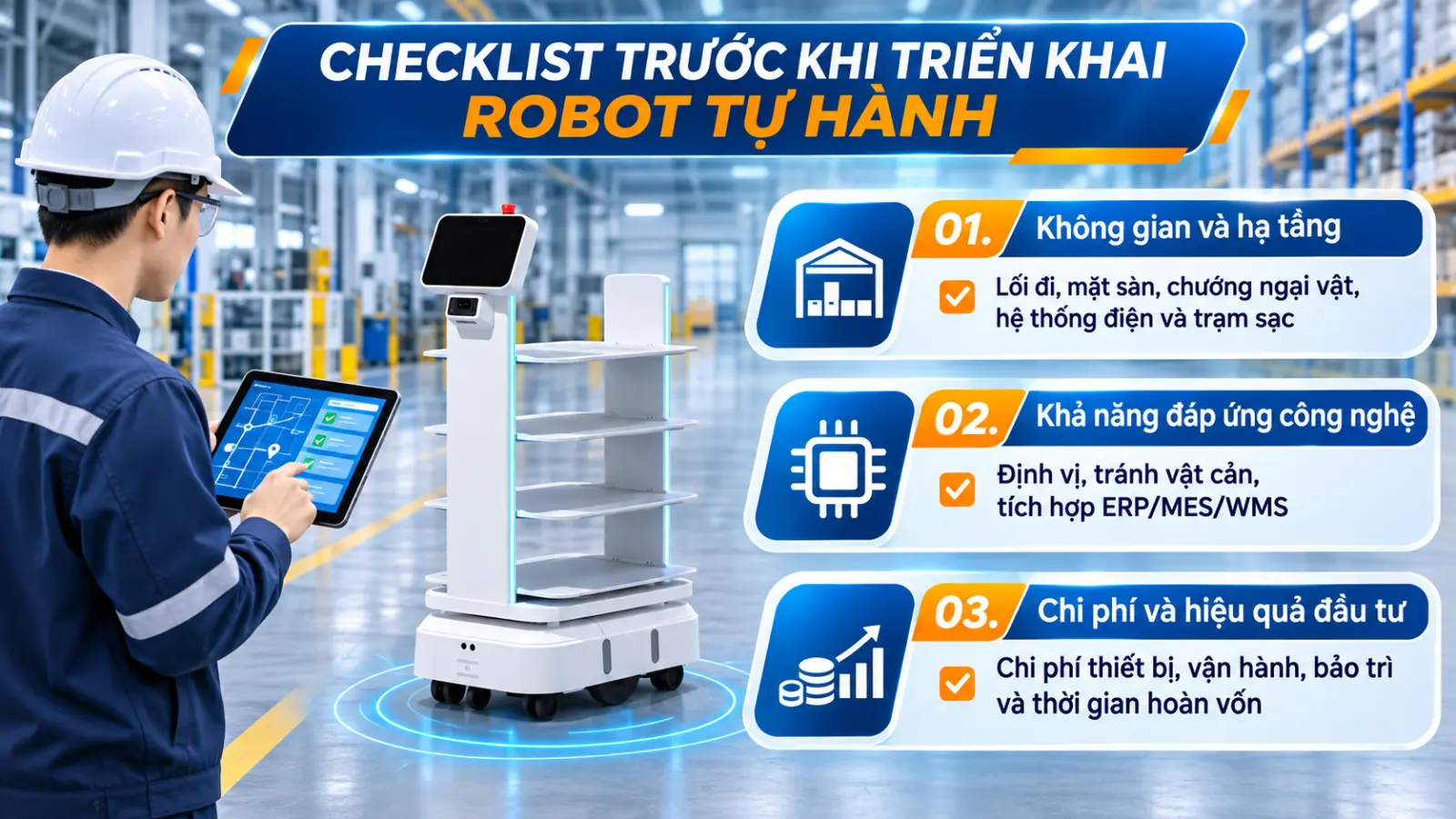
Width of aisles, ceiling height, and obstacle density.
Electrical system, data network, and charging station installation capability.
Environmental conditions (temperature, humidity, dust) affecting robot durability.
3.2. Technology Feasibility Assessment
Match robot features (localization, collision avoidance, environment mapping) with real‑world requirements. Ensure the control software can integrate with existing ERP systems.
3.3. ROI and Budget Analysis
Estimate investment costs (robot purchase, software, installation) and operating expenses (maintenance, energy). Compare with current labor costs and losses to calculate payback period.
4. Implementation Steps
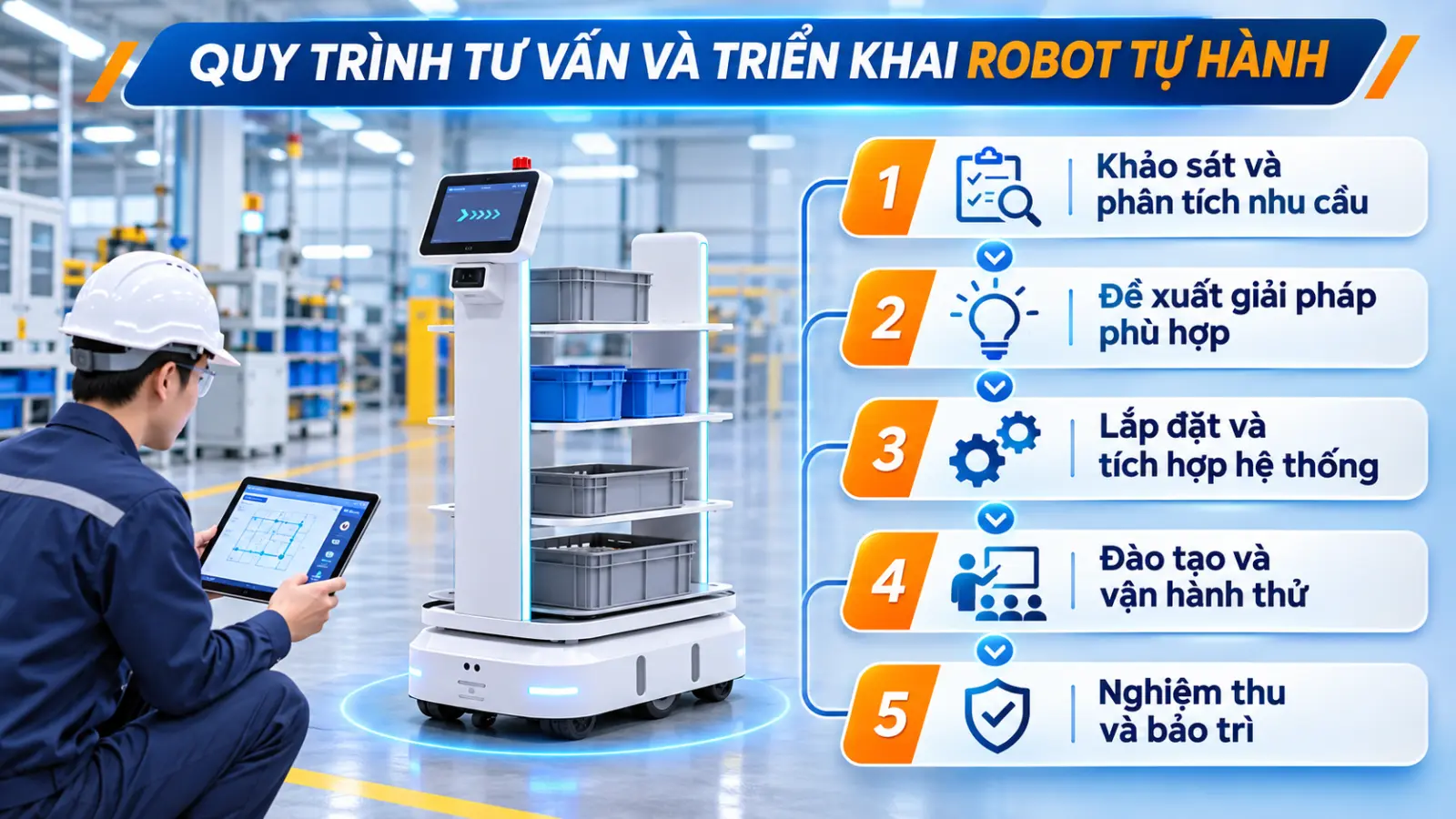
4.1. Deployment Planning
Set a detailed roadmap: preparation phase, installation, trial run, and full operation. Assign responsibilities and define key milestones.
4.2. System Integration and Programming
Install hardware, configure networks, and connect robots to the management system. Program specific tasks (transport, sorting, inspection) based on the created environment map.
4.3. Staff Training and Pilot Operation
Train operators, maintenance personnel, and data managers. Conduct pilot runs in a controlled setting to fine‑tune algorithms and confirm stability.
5. Common Pitfalls to Avoid
5.1. Skipping Environmental Assessment
Failing to fully assess space and environmental conditions can lead to collisions, robot entrapment, or rapid wear.
5.2. Designing Inflexible Processes
Rigid processes that cannot adapt to changing demands or line expansions will reduce long‑term efficiency.
5.3. Neglecting Regular Maintenance
Without a scheduled maintenance plan, downtime and repair costs will rise, affecting projected profitability.
6. Commissioning and Maintenance
6.1. Performance and Stability Testing
Conduct load tests, response time measurements, and positioning accuracy checks. Evaluate results against the standards set during planning.
6.2. Economic Outcome Evaluation
Compare actual costs with the projected ROI. If results fall short, analyze causes and propose improvements.
6.3. Maintenance and Upgrade Planning
Establish a regular maintenance schedule (battery, sensors, software) and allocate budget for hardware upgrades or algorithm updates as technology advances.
7. Digicorp Robotics – Trusted Partner
In‑Depth Consulting Services
Digicorp Robotics provides need analysis, solution design, and detailed deployment planning, helping businesses maximize their investment.
Custom Autonomous Robot Solutions
We develop autonomous robot deployment solutions for enterprises based on AGV, AMR, and multifunctional mobile robot models, serving a wide range of industries.
Contact for Demo and Quote
Digicorp Robotics | Giải Pháp Robot Tự Động Hóa Thông Minh
(+84) 901 725 399
contact@digicorp.vn
Representative Office: 36/91 Tran Duy Hung Street, Yen Hoa, Hanoi, Vietnam
Hanoi Office: Viwaseen Tower, 48 To Huu Street, Dai Mo, Hanoi, Vietnam
Ho Chi Minh City Office: 105A Truong Thi Hoa Street, Tan Thoi Hiep, Ho Chi Minh City, Vietnam
Bac Ninh Office: BT17, Dau Ma Street, Vu Ninh, Bac Ninh, Vietnam
https://digicorp.vn