


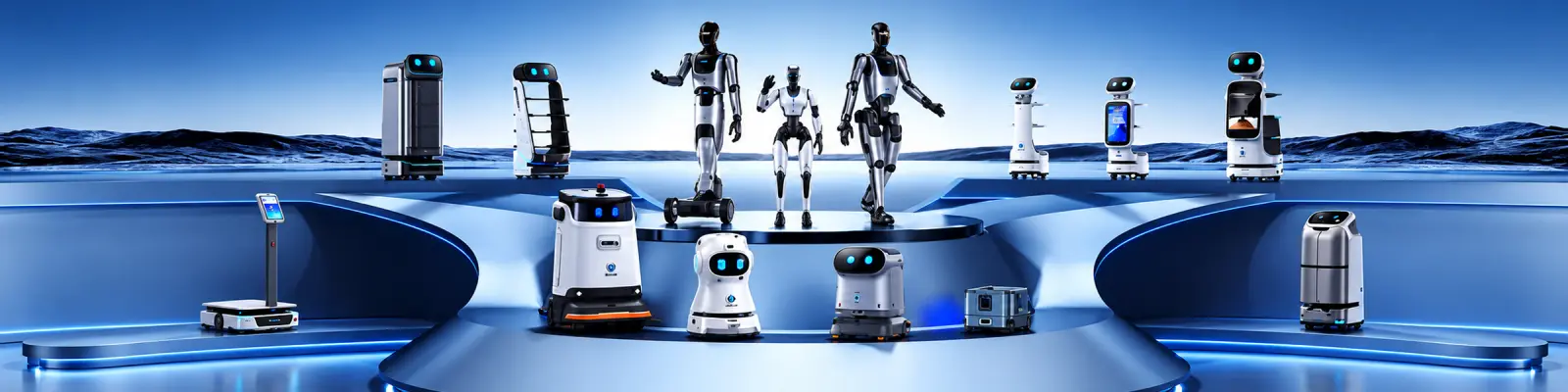
Keenon Robotics
Keenon Robotics – Transport robots for factories and warehouses
Keenon Robotics provides autonomous robots for moving materials, components, and goods within a facility. In Digicorp Robotics' factory robot catalog, two models are presented: the S100 for transporting loads on the robot and the S300 for lifting and moving compatible racks.
1. Keenon Robotics in internal logistics
An automation line typically starts with a pick-up point, a delivery point, and a clear handover process. Robots can handle repetitive trips between the warehouse and the production line, while staff prepare items and handle exceptions. It is advisable to choose a pilot route with sufficient volume to measure effectiveness, rather than automating the entire floor from the outset.
2. Two Keenon models for factory transport
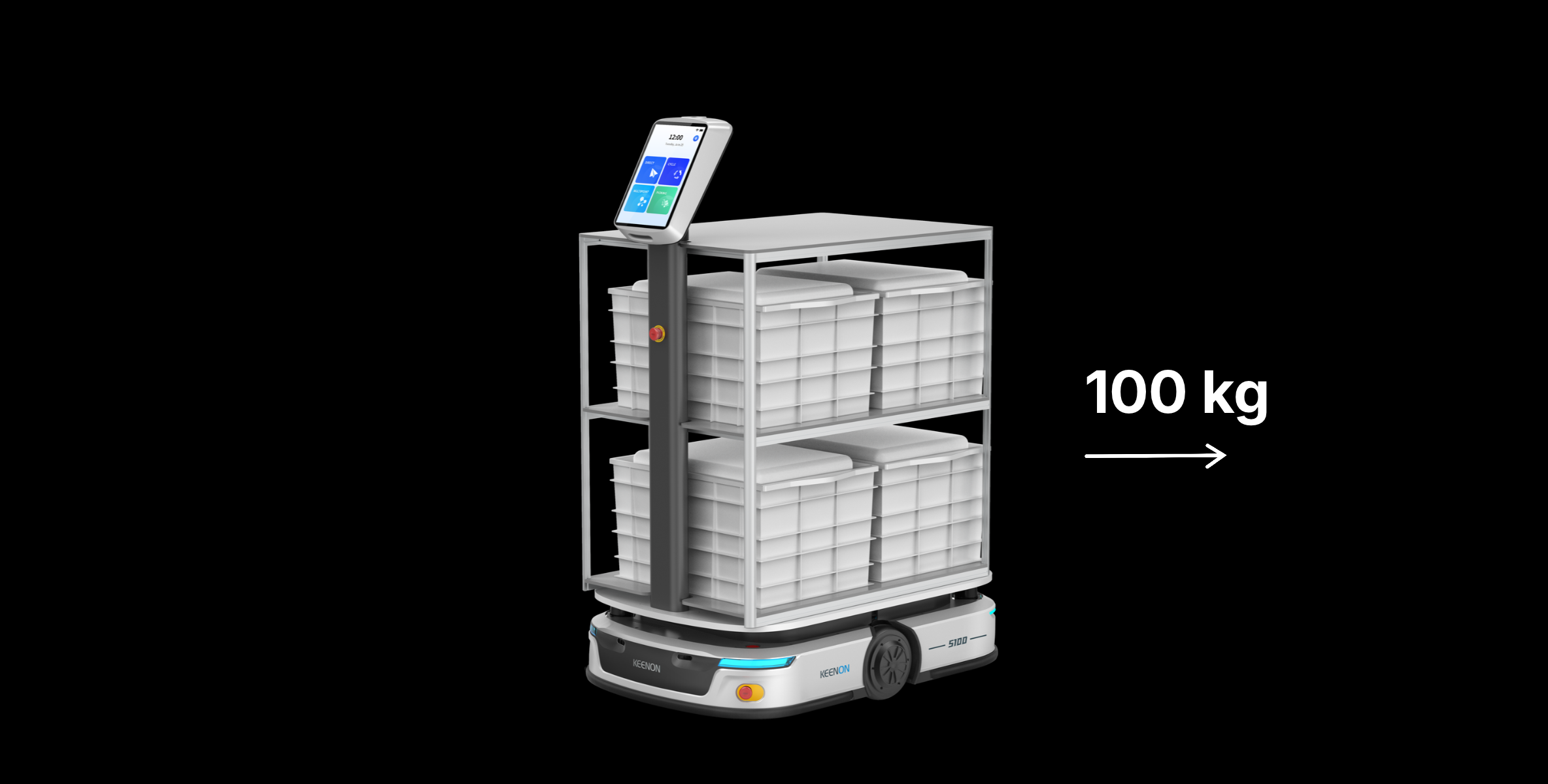
S100 – Transporting materials and packages
Keenon S100 is suitable when staff can place boxes, trays, or packages directly onto the robot’s platform. It is a choice for material handling routes between a consolidation point and a work station. It is necessary to check package dimensions, securing methods, and clearance when the robot changes direction.
S300 – Lifting and moving entire racks
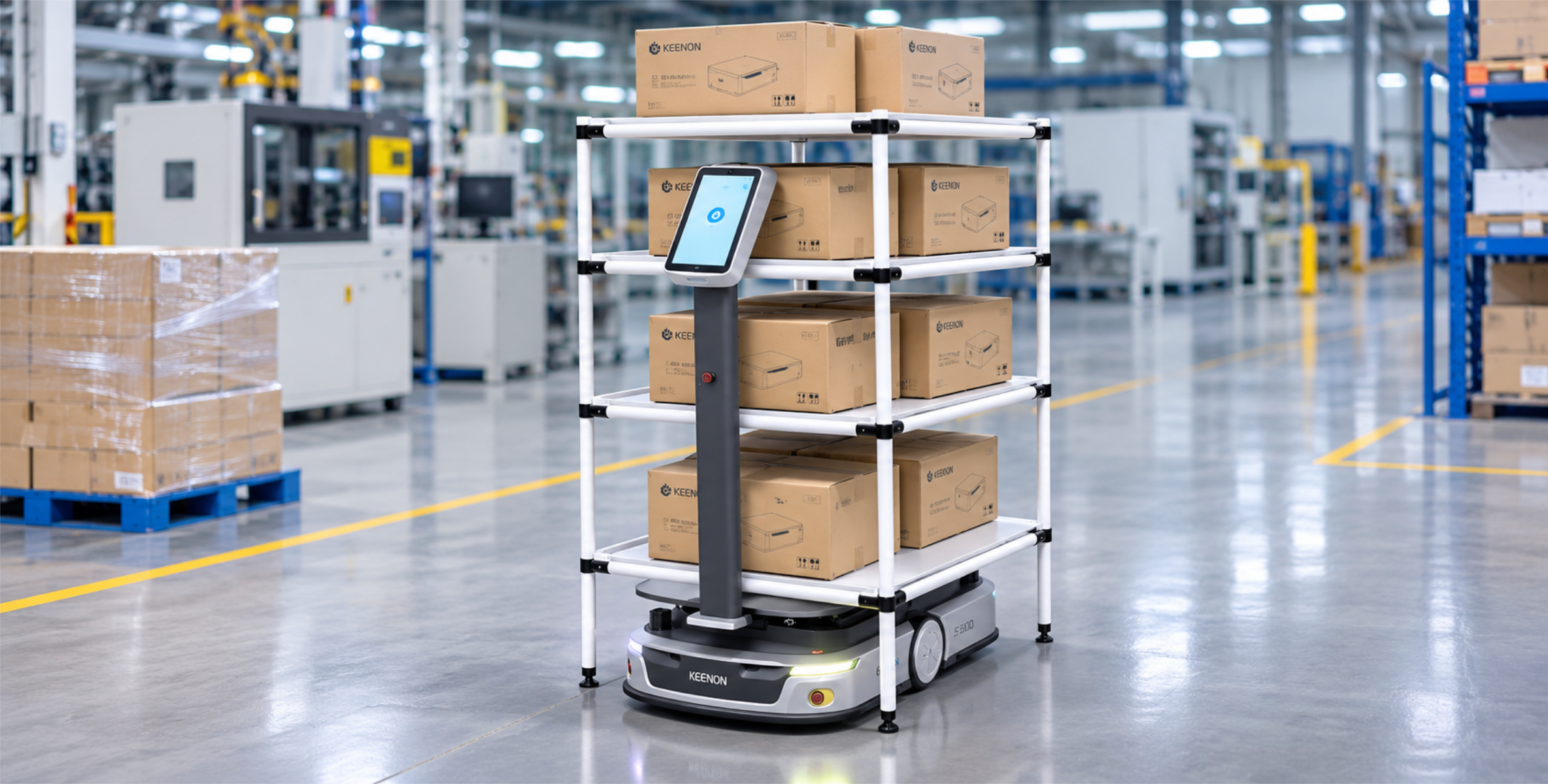
Keenon S300 features an integrated lifting platform with a published maximum payload of 300 kg. The robot is suitable when materials are already on a rack and need to be moved as a whole to the point of use. Before selecting the S300, verify the clearance beneath the rack, the rack leg dimensions, and the total load including both rack and goods.
3. Choose S100 or S300?
Requirement | Model | Points to assess |
|---|---|---|
Transport boxes, trays or components placed on the platform | S100 | Package dimensions, handover method, pathway |
Lift and move entire rack | S300 | Total load, clearance under rack, rack compatibility |
If materials change continuously and are easy to pick and place at each station, prioritize testing a platform transport route. If racks are the unit of circulation in the production process, try the full‑rack lifting option to avoid moving individual packages.
4. Navigation, charging and deployment
According to Keenon Robotics documentation, the S300 combines LiDAR SLAM and stereo vision for navigation, offering automatic charging, manual charging, or battery swapping options. Real‑world performance depends on floor type, density of people and vehicles, internal traffic rules, and configuration. The ability to operate a single robot without external network does not equate to fleet coordination when the network is down.
5. Site assessment and pilot testing
Record shift‑by‑shift traffic volume, typical loads, handover times, and intersection points. During trials, measure completed trips, trip duration, and situations requiring staff intervention. These results help determine the number of robots, charging locations, and integration scope before scaling up.
Before acceptance, conduct trials with representative loads for a work shift, including periods of high foot traffic. With the S100, verify placing and retrieving items at each station. With the S300, test rack pickup and return at locations with varying tolerances to confirm the handover method.
6. Digicorp Robotics – Keenon Robotics solution consulting
Digicorp Robotics assists with transport route surveys, model selection, testing, and operational guidance according to project scope. See smart factory solutions or contact Digicorp Robotics for consulting tailored to your floor layout and real‑world material handling needs.